How Modified Alcohol Recovery Systems Reduce Solvent Costs
Table of Contents
- What Do Modified Alcohol Recovery Systems Actually Do?
- Where Does Solvent Loss and Water Contamination Come From?
- How Does Vacuum Distillation Return Usable Solvent?
- When Does Recovery Pay Off and What Should Buyers Confirm?
- What should the distillation system separate besides oil?
- Which modifications matter for modified alcohol blends?
- What Should You Send Us to Confirm Modified Alcohol Recovery Fit?
- Which Questions Do Engineers Ask Before Adding Modified Alcohol Recovery?
- Is recovered modified alcohol as stable as fresh solvent?
- Why does recovered modified alcohol sometimes smell different or leave spots?
- Can recovery handle chlorinated or hydrocarbon contamination in modified alcohol?
- Can we retrofit recovery to an existing open-top ultrasonic cleaning line?
Modified alcohol recovery systems fail most often not because the distillation column is undersized, but because the solvent was never mapped before the equipment was specified. Our engineering team has repeatedly seen solvent budgets shift from cleaning chemistry into waste disposal, evaporation, and drag-out, while the recovery skid is blamed for a shortfall it was never sized to correct. This article explains how closed-loop vacuum recovery works, where the real losses sit, and which checks prevent a solvent recovery project from becoming an expensive bypass loop.
What Do Modified Alcohol Recovery Systems Actually Do?
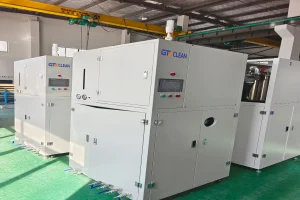
Modified alcohol recovery systems are not a single piece of hardware. In a closed-loop industrial cleaning line, they combine a dirty solvent collection tank, filtration, heating, vacuum distillation, and a clean solvent return path. The objective is to strip out oils, resins, water, and fine particulates before returning the solvent to the cleaning tank. In GTKCLEAN solvent vacuum cleaners, this loop is built into the machine rather than bolted on after cleaning.
| Parameter | Single-station modified alcohol vacuum cleaner |
|---|---|
| Maximum workpiece load | Up to 200 kg per batch |
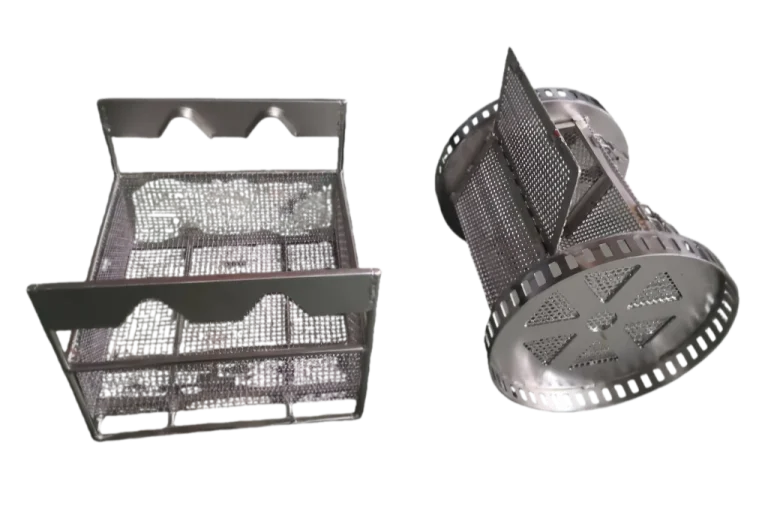
| Basket size | 670 × 480 × 400 mm |
| Cleaning cycle | 12 to 15 minutes two-stage, 8 to 9 minutes single-stage |
| Installed power | 75 kW |
| Cleaning fluid consumption | Up to 200 L/month |
The vacuum circuit reduces the boiling point of the solvent, which protects heat-sensitive stabilizer packages. A well-designed recovery loop runs continuously during the cleaning cycle, not as a weekly batch operation. That distinction matters because contaminants concentrate until the next still run in a batch setup, and the cleaning bath drifts with them.
Where Does Solvent Loss and Water Contamination Come From?
Most solvent loss in modified alcohol cleaning does not come from the recovery still. It comes from drag-out on parts and baskets, evaporation through open tank surfaces or vapor degreaser zones, and periodic dumps of oil-loaded solvent. Compressed air blow-off and humid shop air also introduce water. Once water content rises, modified alcohol blends can become hazy, dry more slowly, and leave spots on precision work.
Drag-out deserves the most attention because it is controllable. Basket drainage time, part orientation, and vapor zone dwell all change how much solvent leaves the machine. Water requires the opposite fix: the recovery loop must separate water continuously, not leave it to settle in the clean tank. Some systems use vacuum distillation plus a water knockout before the return line.
Modified alcohol recovery rarely delivers its expected payback when it is treated as a standalone add-on. <Implement Solvent Recovery Systems: A Factory Efficiency Guide> covers how to map solvent loss points before specifying a recovery skid, so the equipment is sized to actual contamination load rather than tank volume alone.
How Does Vacuum Distillation Return Usable Solvent?
Vacuum distillation works by lowering the pressure above the dirty solvent so that the solvent boils at a temperature below its atmospheric boiling point. The steps follow a fixed order.
- Gross particles and free oil are filtered before the solvent enters the recovery circuit.
- The vacuum pump reduces chamber pressure.
- A heated still evaporates the solvent while oils, resins, and dissolved solids stay behind as still bottoms.
- Vapor travels through a condenser and then a water separator.
- Recovered solvent returns to clean solvent storage or directly to the rinse tank.
At GTKCLEAN, this loop is integrated into the same machine that performs ultrasonic cleaning and vapor degreasing. Built-in vapor condensation and vacuum distillation recycle solvent continuously rather than waiting for a batch still. The product line compatible with modified alcohol lists installed power at 75 kW and cleaning fluid consumption at up to 200 L/month. That consumption figure assumes the recovery loop is working; it is not a characteristic of the solvent alone.
If your program involves blind holes, high oil load, or high humidity, confirm the water separation capacity and distillation temperature before finalizing the recovery skid. Send your part material, oil type, and monthly throughput to [email protected].
Recovery performance also depends on process control upstream. <Inline Ultrasonic Washing Systems for Enhanced Process Control> covers how controlled transfer and rinsing reduce drag-out into the solvent, which directly lowers the load on the recovery circuit.
When Does Recovery Pay Off and What Should Buyers Confirm?
Recovery pays off when the cost of losing solvent exceeds the cost of running and maintaining the still. A GTKCLEAN single-station modified alcohol vacuum cleaner carries an initial solvent capacity of up to 1800 L and a cleaning fluid consumption rating of up to 200 L/month. That ratio only holds when distillation and vapor condensation are online. Without recovery, oil-loaded solvent is dumped far earlier, and evaporation losses continue unchecked.
| Decision factor | What to confirm |
|---|---|
| Water separation | Online water separator rather than manual decanting |
| Distillation temperature | Stays within the solvent supplier’s stabilizer band |
| Materials | Seals and gaskets compatible with modified alcohol and recovered solvent |
| Throughput | Distillation rate matched to oil load and drag-out, not tank volume |
| Integration | Recovery tied to machine PLC and vapor condensation, not a standalone timer |
What should the distillation system separate besides oil?
Water, low boilers, and sludge. Water is the main problem because modified alcohol blends are sensitive to water content. A system with a water knockout and automated cut points keeps the solvent closer to its original profile than a simple batch still. Sludge handling also matters because still bottoms need a safe drain path that does not expose operators to hot solvent vapor.
Which modifications matter for modified alcohol blends?
Not every solvent blend can tolerate the same distillation temperature. Some formulations contain stabilizers and co-solvents that break down if overheated. The recovery system should run below the supplier’s recommended distillation band and incorporate final filtration after return. Seal and gasket materials also need verification because recovered solvent may contain trace water and acids that attack standard elastomers.
Before issuing a request for quote, apply the same engineering logic to the supplier as to the still. <Choosing a Reliable Ultrasonic Equipment Manufacturer: A Strategic Guide> covers how to evaluate process validation, service capability, and solvent-specific design history so the recovery system does not become an orphaned skid on the factory floor.
What Should You Send Us to Confirm Modified Alcohol Recovery Fit?
Recovery projects fail when the skid is specified from tank volume alone. The better starting point is a contaminant load profile: part material, oil type, drag-out rate, and target residue level. GTKCLEAN engineers use that data to select distillation capacity, water separation, and stabilizer-safe operating temperatures before quoting a system. Send your part drawing, contaminant description, and monthly solvent consumption to [email protected] or call +86 17768507147. We will confirm whether modified alcohol recovery is the right loop for your line.
Which Questions Do Engineers Ask Before Adding Modified Alcohol Recovery?
Is recovered modified alcohol as stable as fresh solvent?
Stability depends on how much water and low boilers are removed. A properly designed vacuum recovery system operates below atmospheric pressure, so the solvent boils at a lower temperature. That protects heat-sensitive stabilizers better than atmospheric distillation. If the system includes an online water separator and keeps distillation temperature within the solvent supplier’s recommended band, recovered modified alcohol can match fresh solvent in most precision cleaning applications. The failure mode is usually a missing water knockout or an overheated still. Confirm separator type and temperature control before accepting a quote.
Why does recovered modified alcohol sometimes smell different or leave spots?
A smell difference is not an automatic sign of recovery failure. Modified alcohol blends contain polar additives, and repeated heating can concentrate low-volatility fractions if the still does not cut light ends properly. Spots or slower drying usually point to water carryover, not the alcohol itself. The recovery loop must include a water separator, and the clean solvent return should pass through final filtration before entering the rinse tank. If residue still appears, check the distillation temperature profile first, then the part basket drainage time. Both changes often fix the problem before fresh solvent is needed.
Can recovery handle chlorinated or hydrocarbon contamination in modified alcohol?
No. Mixed solvent streams should not be fed into a modified alcohol recovery circuit without segregation. Chlorinated solvents, hydrocarbons, and modified alcohols have different boiling ranges and stabilizer chemistries, so distillation can create acidic decomposition products or leave cross-contaminated solvent in the clean tank. The correct approach is to keep each solvent family in its own machine or recovery circuit. Some GTKCLEAN solvent vacuum cleaners can switch between hydrocarbon and modified alcohol, but the cleaning and recovery lines are flushed and separated before a chemistry change. Confirm this segregation protocol before mixing any recovered solvent.
Can we retrofit recovery to an existing open-top ultrasonic cleaning line?
In factory audits I have reviewed, retrofitting recovery to an open-top line rarely pays until the evaporation path is closed. An open tank vents solvent continuously, so the recovery skid works against a loss rate it cannot control. I have seen cases where a new vacuum distillation loop delivered little net savings because the tank cover and freeboard were never changed. For precision applications, the better route is a solvent vacuum cleaner with integrated condensation and distillation, or a sealed conversion built around the existing line. Share your tank drawings and monthly solvent consumption with [email protected] to confirm which retrofit route fits.
If you’re interested, check out these related articles:
Boost Automotive Manufacturing Cleaning Efficiency: A Strategic Guide
Selecting Industrial Parts Washers for CNC Machining Success
Ultrasonic Cleaning systems for Pre PVD (Coating) Parts