Surfactants and Oil and Grease Removal in Industrial Parts Cleaning
Table of Contents
- Why Oil and Grease Resist Plain Water
- How Surfactants Remove Oil and Grease
- Roll-Up
- Emulsification
- Solubilization
- Selection Variables That Change Surfactant Performance
- Process Integration: Ultrasonic, Multi-Tank, and Rinsing
- Troubleshooting and Detergent Control
- Detergent and Process Checklist
- Request an Application Review
- Frequently Asked Questions About Surfactant Degreasing
- What is the difference between a degreaser and a surfactant?
- Do surfactants remove oil without mechanical action?
- Can one surfactant clean every oil and grease?
- How do I know if I have enough detergent in the bath?
- Are surfactant cleaners safer than solvents?
- References
Oil films and grease deposits remain among the most common cleaning challenges in machine shops and high-volume manufacturing. Plain water penetrates poorly, spreads unevenly, and leaves smears on metal surfaces because oil is hydrophobic. Surfactants reduce interfacial tension and convert the contaminant into a form that can be lifted, dispersed, and rinsed away. This guide explains the mechanism, the key selection variables, and how the chemistry performs inside an industrial parts washer.
Why Oil and Grease Resist Plain Water
Water is a strongly hydrogen-bonded polar solvent. Petroleum oils, stamping lubricants, and many rust preventives are largely nonpolar. Because water molecules show little attraction for the oil phase, water beads rather than wets on an oily metal surface [1]. Spray force may push part of the film, but the film can re-wet the surface after the force is removed because the interface remains energetically unfavorable.
A surfactant molecule is amphiphilic: the head is water-compatible and the tail is oil-compatible. At an oil-water-solid interface, the tail associates with the oil phase while the head remains in the aqueous phase. That orientation lowers surface and interfacial tension, so the cleaning solution wets the part more uniformly and can reach narrow gaps [2].
If your residue is a light oil film, heavy grease, or carbonized patch, do not treat all three as the same cleaning problem. The most useful surfactant selection starts with the contaminant and the part material, not with a machine specification alone.
How Surfactants Remove Oil and Grease
Above the critical micelle concentration (CMC), surplus surfactant molecules aggregate into micelles: tails orient inward and heads orient outward into water [1], [2]. The CMC is not a universal cleaning threshold, but it marks the concentration range where additional surfactant becomes available for bulk contaminant removal instead of only populating interfaces.
Three mechanisms operate together in most industrial degreasing baths.
Roll-Up
Surfactant molecules adsorb at the oil-water-solid contact line, lower the contact angle, and allow the oil film to contract into droplets under mechanical force or agitation [1], [3]. Roll-up is efficient on smooth surfaces and on heavier films when enough fresh solution reaches the part surface.
Emulsification
Detached droplets are stabilized by a surfactant film, which helps prevent them from coalescing and re-depositing on the part [3]. Emulsification is important for medium-viscosity oils and high-throughput lines. It also means the bath needs oil splitting, filtration, skimming, or decanting to prevent the oil load from saturating the detergent.
Solubilization
At concentrations above the CMC, low-molecular-weight oils can enter the interior of micelles [2]. Solubilization is strongest for light oils and additives, not for heavy grease. Relying on solubilization alone tends to produce slow and inconsistent cleaning on production parts.
| Contaminant Type | Typical Source | Dominant Mechanism | Process Note |
|---|---|---|---|
| Light mineral or cutting oil | Machining, turning, milling | Wetting, roll-up, emulsification | Moderate heat helps; control foam in spray stages |
| Chlorinated stamping or forming lubricant | Stamping, deep drawing | Emulsification plus co-solvent-like surfactant | Verify final rinse; the lubricant can be tenacious |
| Rust-preventive grease | Storage or interstage protection | Roll-up after temperature softening | Requires strong agitation and enough dwell time |
| Carbonized or oxidized residue | Heat treating, aged oil films | Limited by surfactant alone | May require mechanical or chemical pre-treatment |
| Silicone mold release | Die casting, molding | Selected emulsification or solubilization | Check final surface energy before coating or painting |
| Fingerprint and light oil film | Handling, light assembly | Wetting and emulsification | Lower concentration may be sufficient |
Selection Variables That Change Surfactant Performance
A single published hydrophilic-lipophilic balance (HLB) value should not be used as a pass/fail specification. HLB indicates whether the molecule favors oil or water: lower values lean toward oil compatibility, higher values toward water compatibility [2]. In an aqueous wash bath, HLB is tuned to the oil type and the part surface.
Surfactant charge also changes wetting, foam, residue, and adsorption on the part. Nonionic ethoxylates are widely used because their wetting behavior and cloud point can be adjusted. Anionics often improve removal of polar soils but may foam more. Cationics are rarely used as primary metal-cleaning detergents because of substrate interaction. Amphoterics can help special substrates and mixed surfactant packages [2].
Surface tension and interfacial tension are measured by standardized methods such as the Wilhelmy plate or Du Noüy ring [4], [5]. Those measurements help a supplier qualify a detergent and help a user monitor incoming chemistry, but they do not replace a cleaning trial on the actual part.
The starting point is usually a formulated industrial cleaning detergents package rather than a single surfactant raw material.
| Variable | What It Controls | Practical Check |
|---|---|---|
| Concentration vs CMC | Availability of micelles | Use supplier titration, refractometer, or conductivity method |
| HLB | Oil vs water compatibility | Match to oil class, not a single universal value |
| Surfactant charge | Wetting, foam, residue, adsorption | Check part material and final rinse compatibility |
| Temperature and cloud point | Oil viscosity and surfactant solubility | Stay below the cloud point for nonionics unless process is validated |
| pH and builders | Fatty soil saponification and hard water control | Protect aluminum and coated parts from pH extremes |
| Final rinse water quality | Residue and water spots | Use RO or DI water in the final stage |
Process Integration: Ultrasonic, Multi-Tank, and Rinsing
Industrial cleaning is not a soak test. Ultrasonic cavitation creates pressure fluctuations at the part surface and transports fresh surfactant solution into blind holes and threads [1]. Agitation accelerates roll-up and emulsification by constantly refreshing the liquid film at the interface. In a multi-stage aqueous process, the typical sequence is pre-rinse or spray removal of gross oil, heated surfactant wash, recirculated rinse, final DI rinse, and drying.
[Matching tank configuration and stage sequence to the removal mechanism determines whether roll-up and emulsification become repeatable part cleanliness.] <Ultrasonic Cleaning Process: A Step by Step Technical Guide> covers the full step-by-step process and how each stage supports chemical cleaning.
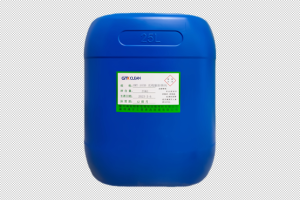
For production aqueous cleaning, the automatic ultrasonic cleaner for CNC machined parts and multi-tank ultrasonic cleaning machine illustrate how the detergent stage is paired with mechanical energy and final rinse. Multi-stage systems for CNC parts can pair ultrasonic degreasing with RO water rinse, DI water rinse, and hot air or vacuum drying. Pre-PVD cleaning systems can use a similar train with final rinse water conductivity controlled to ≤0.06 μS/cm to reduce water spots and secondary contamination. These are product data for a specific system, not a universal specification: the correct rinse requirement depends on the cleanliness standard for your part.
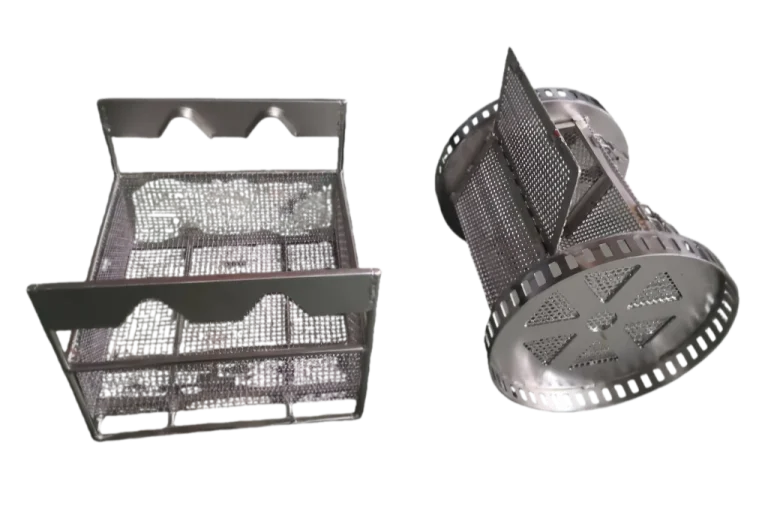
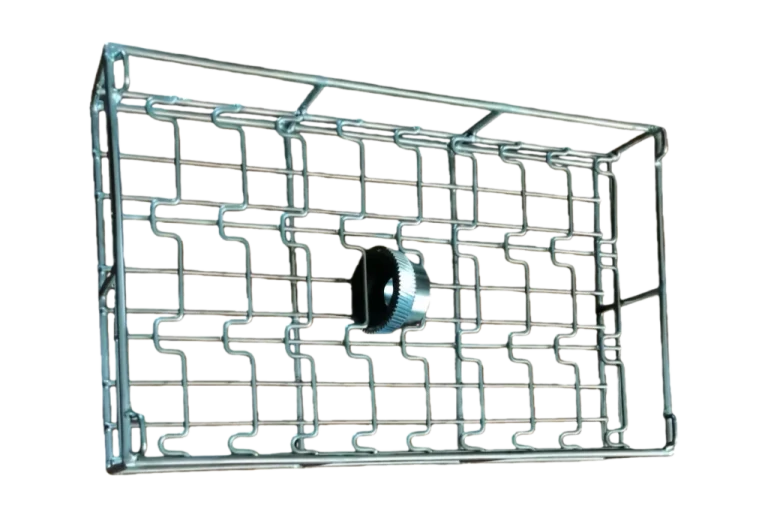
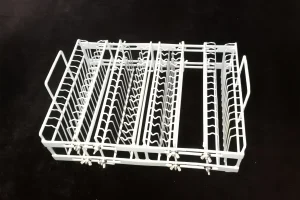
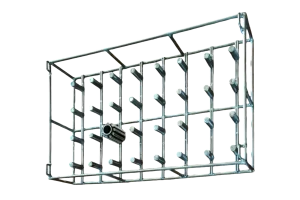
Basket and rack design changes detergent performance. Closely nested parts create dead zones where the surfactant solution cannot exchange. Baskets that allow drainage and solution movement, or rotary baskets that reposition parts, improve contact with blind holes and recesses.
Rinsability is part of surfactant performance. A detergent that removes oil but leaves an invisible surfactant film can cause coating or plating failures later.
[Aqueous surfactant performance depends on the same chemistry described above, but the wetting and rinsing path through the system changes how reliably the oil leaves the part.] <Water Based Versus Solvent Based Ultrasonic Cleaning Systems> covers the trade-offs when surfactants are used in water-based ultrasonic processes versus solvent degreasing.
Troubleshooting and Detergent Control
Oil residue after cleaning usually comes from one of six causes: surfactant concentration below the working range, wrong HLB for the oil, temperature outside the working window, hard water or rinse contamination, an oil-saturated bath, or part geometry that prevents solution exchange.
- Low concentration: Top up with monitored concentration; do not simply add detergent on a fixed timer.
- Wrong HLB: Run small screening trials before changing tank configuration.
- Temperature: For nonionic ethoxylates, avoid running above the cloud point unless the process has been validated.
- Hard water: Use builders, sequestrants, or DI rinse water to control mineral film.
- Oil-saturated bath: Add oil skimming, decanting, filtration, or controlled drag-out.
- Geometry: Reduce load density, improve basket orientation, or add rotary motion.
Ongoing detergent control should be tied to a documented process, not visual appearance alone. Supplier titration, surface tension measurement, and oil load tracking are more repeatable as the bath is new and as it ages [4], [5].
Chemistry troubleshooting is fastest when the problem is defined by part material, oil type, and current bath data. If you are chasing a persistent residue issue, send those three pieces of information plus a photo to [email protected]. We review them against your current washer configuration and recommend the least disruptive change first.
[Once surfactant removal is complete, surface energy must remain low enough for rinse water to sheet without leaving droplet stains or residue.] <Precision Cleaning: The Role of Surface Energy in High-Performance Coating> covers surface energy measurement and its effect on coating adhesion after cleaning.
Detergent and Process Checklist
- Identify the oil type, additive package, and whether the residue is fresh or aged.
- Identify the part substrate and any coating, plating, elastomer, or multi-material compatibility limit.
- Set wash temperature and cloud point from the detergent supplier data.
- Set a concentration control method: titration, refractometer, conductivity, or sensor-based dosing.
- Verify rinse water quality and final rinse conductivity.
- Confirm mechanical action: ultrasonics, pump flow, spray pressure, or basket rotation.
- Validate cleanliness with the production standard: white glove, NVR, particle count, dyne test, or customer-specific requirement.
Request an Application Review
Surfactant selection is one part of a reliable cleaning system. Tank configuration, basket orientation, rinse quality, and drying all affect the final result. If you are planning a new cleaning stage or upgrading an existing line, send the following information to [email protected] or call +86 17768507147:
- Part material and dimensions
- Oil or grease types and current cleaning method
- Cleanliness target or customer specification
- Production rate and available floor space
- Current problem: residue, water spots, foam, odor, or throughput
We will help you evaluate whether an aqueous detergent in a multi-stage or ultrasonic system is the right path, and link your specification to the required detergent, rinse water, and mechanical energy.
Frequently Asked Questions About Surfactant Degreasing
What is the difference between a degreaser and a surfactant?
A surfactant is the surface-active component that lowers interfacial tension. A degreaser is the formulated product containing surfactants, builders, corrosion inhibitors, anti-foam additives, and possibly co-solvents. The degreaser, not the surfactant alone, is what you charge into the wash tank.
Do surfactants remove oil without mechanical action?
Surfactants wet the surface and lower interfacial tension, but industrial greases and heavy oils almost always need agitation, temperature, or ultrasonic energy to detach the film and transport oil away from the part. The chemistry sets the condition; mechanical energy completes the removal.
Can one surfactant clean every oil and grease?
No single surfactant package is optimal for every contaminant. Light mineral oils, chlorinated forming lubricants, silicone mold release, and oxidized residues can require different HLB, charge, and builder packages.
How do I know if I have enough detergent in the bath?
Monitor concentration with the supplier’s titration, refractometer, or conductivity method, and watch for rising oil load, hazy rinse water, or visible residue. Maintain top-up and oil removal rather than simply adding detergent on a fixed schedule.
Are surfactant cleaners safer than solvents?
Many water-based surfactant cleaners reduce VOC exposure and flammability concerns compared with some solvent degreasers, but safety depends on the specific chemistry, pH, additives, mist exposure, and part compatibility. Review the manufacturer’s safety data sheet and your process controls before changing [6].
References
[1] M. J. Rosen, Surfactants and Interfacial Phenomena, 4th ed. Hoboken, NJ: Wiley, 2012.
[2] K. Holmberg, B. Jönsson, B. Kronberg, and B. Lindman, Surfactants and Polymers in Aqueous Solution, 2nd ed. Chichester, U.K.: Wiley, 2002.
[3] D. J. Shaw, Introduction to Colloid and Surface Chemistry, 4th ed. Oxford, U.K.: Butterworth-Heinemann, 1992.
[4] ASTM International, D1331-20, Standard Test Methods for Surface and Interfacial Tension of Solutions of Surface-Active Agents, West Conshohocken, PA: ASTM International, 2020.
[5] OECD, OECD Guidelines for the Testing of Chemicals, Test No. 101: Surface Tension, Paris: OECD Publishing, 1995.
[6] U.S. OSHA, “Hazard Communication Standard,” 29 CFR 1910.1200, Washington, DC: U.S. Department of Labor.
If you’re interested, check out these related articles:
What’s the Best Pre-Coating Cleaning Machine for PVD, DLC & CVD Coating Factories?
How to Choose the Best Ultrasonic Power for an Ultrasonic Cleaning Machine ?
Automated Tunnel Cleaner