What Is pH in Parts Cleaning and Why It Matters for Quality
Table of Contents
- What pH Actually Means in a Parts Cleaning Bath
- How pH Controls Detergent and Contaminant Removal
- Why Production Bath pH Moves
- pH, Corrosion, and Material Compatibility
- pH in Rinsing and Rust Prevention
- Measuring and Controlling pH Without Guessing
- pH in Multi-Stage Cleaning Lines
- Common pH-Related Cleaning Failures
- Get a pH and Aqueous Chemistry Review for Your Parts
- Frequently Asked Questions About pH in Parts Cleaning
- What pH should an ultrasonic cleaning bath be?
- Does pH affect ultrasonic cavitation?
- What happens if pH is too high or too low?
- How often should pH be measured?
- Why is my DI rinse water pH around 5.6?
- Is a pH reading enough to verify cleaning quality?
- What pH is safe for aluminum parts?
- References
Every production cleaning failure has a root cause, and a large share trace back to the same variable: pH. It determines whether a detergent lifts oil, whether aluminum corrodes, whether steel flash-rusts after rinsing, and whether residues survive into coating. Yet pH is often measured once and ignored. In industrial parts cleaning, pH is not a laboratory concept. It is the control variable that separates a stable process from one that quietly produces dull, stained, or rejected parts.
What pH Actually Means in a Parts Cleaning Bath
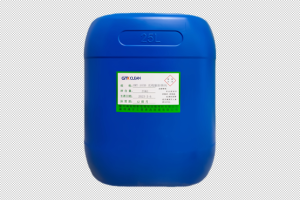
pH is a logarithmic measure of hydrogen ion activity in aqueous solution. It is scaled from 0 to 14, with values below 7 considered acidic, 7 neutral, and above 7 alkaline. Measurement is normally referenced at 25°C because pH shifts with temperature [1]. In a cleaner, the important point is not the number alone, but which chemical reactions it favors.
pH indicates intensity, not reserve. Two baths can show the same pH and yet have very different acid or alkali capacity. That difference is measured as acidity or alkalinity, which is why correcting pH in production often requires adding a buffering builder system rather than chasing a reading with concentrated acid or caustic [2]. This same distinction explains why a bath can test inside its specified range and still fail: detergent can be depleted while pH remains roughly unchanged because dissolved salts and contaminants buffer the solution.
How pH Controls Detergent and Contaminant Removal
Most water-based industrial cleaners fall into acidic, neutral, or alkaline classes. Alkaline cleaners use builders such as silicates, phosphates, carbonates, and hydroxides to saponify fatty oils, emulsify light oils, and disperse particulates. In production, they are often selected for cutting oils, stamping compounds, carbonized soils, and heavy organic residues. Acidic cleaners dissolve metal oxides, scale, hard-water films, and mineral soils, so they perform best when the soil is inorganic rather than heavy oil. Neutral cleaners rely mainly on surfactants and are used where acid or alkalinity would be too aggressive.
pH also changes how surfactants behave. An anionic surfactant may remain stable in alkaline conditions but lose charge or solubility at low pH. Nonionics generally tolerate a broader pH range. Dissolved metal ions can precipitate as pH drops, creating particles that later show up as residue on the part. In practice, an optimized alkaline degreaser can remove more oil per minute than a neutral detergent on the same part because saponification adds a chemical removal path to mechanical action.
pH is only one part of aqueous cleaner selection. <Aqueous Parts Cleaning: A Manufacturer’s Technical Guide> covers detergent classes, rinse design, and the production trade-offs that keep a multi-stage aqueous line stable.
Why Production Bath pH Moves
Fresh bath pH is almost never the pH after one shift. Drag-in from acid or alkaline pre-treatments, oil breakdown into acidic species, CO₂ absorption, evaporation, hard water minerals, and detergent depletion all influence pH. A caustic degreaser loaded with heavy stamping oil gradually loses alkalinity because alkaline compounds are consumed by saponification. The pH may be supported for a while by reserve alkalinity, then fall quickly once that reserve is exhausted. Acid baths rise as acids are consumed or diluted by carryover.
Makeup water matters. Hard water contributes carbonates and can buffer pH. High-purity water has low buffering by design. Pure water exposed to air dissolves CO₂ and can drift from near 7 to around 5.6, which is normal and does not indicate acid contamination [3]. Correcting pH starts with measuring it correctly, then adding the appropriate reserve chemical. Concentrated acid or caustic should never be dosed directly onto aluminum or precision parts; additions belong in a circulating tank with controlled increments.
The pH discussion applies only to water-based cleaning because solvent degreasers do not use an aqueous pH field. <Water Based Versus Solvent Based Ultrasonic Cleaning Systems> covers where solvent and aqueous choices diverge and what that means for daily process control.
pH, Corrosion, and Material Compatibility
Acid and alkaline baths react with the part, not just with the soil. Steel can tolerate a wide alkaline band, but acidic cleaning may leave active surfaces prone to flash rust unless passivation or rust inhibition follows. Copper and brass tarnish and dissolve in strongly alkaline and strongly acidic conditions. Aluminum is the classic trap: it is amphoteric, meaning it can corrode in both low-pH and high-pH solutions. Practical aluminum-safe conditions usually sit near neutral, but aggressive chelates, high temperature, and long exposure can reduce the safe window further [4].
The following pH classes are common reference bands in water-based industrial cleaning. They are starting points, not universal specifications.
| pH class | Typical cleaning function | Example soils |
|---|---|---|
| Strongly acidic, below pH 3 | Oxide, rust, and scale removal | Heat-treat scale, rust, mineral deposits |
| Mildly acidic, pH 3–6 | Controlled pickling or derusting | Light scale, smut, oxide films |
| Neutral, pH 6–8 | Surfactant displacement | Sensitive metals, precision parts, light soils |
| Mildly alkaline, pH 8–10 | Light oil removal | General shop soils, light cutting fluids |
| Strongly alkaline, pH 10–13 | Heavy degreasing and carbon removal | Heavy oils, wax, stamping compounds, carbon |
For any material, pH must be evaluated together with temperature, exposure time, detergent type, and rinse design. A bath that is safe for a five-minute cycle may etch the same part after a thirty-minute delay.
pH in Rinsing and Rust Prevention
Rinse pH is as important as wash pH. If an alkaline wash is followed by an undersized rinse, residual alkalinity raises rinse pH and leaves detergent residues on the part. Hard water ions can then react with that residue to form scale or spotting. A low-pH final rinse may acidify a steel surface and encourage flash rust after drying. For corrosion-sensitive parts, a rinse-stage rust inhibitor is often necessary because pH alone cannot protect bare steel during wet transfer.
Final rinse quality is usually specified by conductivity rather than pH. High-purity water graded for precision cleaning may show a moderately acidic reading because of dissolved CO₂, yet still be extremely clean [3]. When rinse pH trends strongly upward or downward despite stable water quality, the usual cause is insufficient carryover removal from the previous stage.
Once residual films from the rinse survive into drying, they can fail coating adhesion. <How to Ensure Perfect Coating Adhesion Without Water Spots or Stains?> covers the rinse and drying controls that remove the last residue layer before PVD, DLC, paint, and other coatings.
Measuring and Controlling pH Without Guessing
Production pH measurement uses a calibrated pH meter with temperature compensation. Calibration should follow standard water-pH practice with two or three fresh buffer solutions, a stable electrode, and thorough rinsing between samples [1]. If the bath is hot, either cool a representative sample or use an electrode rated for the operating temperature. Record pH together with bath temperature, because pH without temperature can misrepresent the process.
Not every pH change demands chemical addition. Before dosing, check the following:
- bath level and makeup water source
- drag-in from the previous stage
- oil loading and detergent concentration
- circulation, filtration, and skimming performance
- the bath’s alkalinity or acidity reserve
Automatic metering can hold a tight pH band once the reserve chemistry is understood. Without that reserve measurement, an automatic controller may only chase short-term readings and add chemical too often.
If pH still drifts after checking makeup water and drag-in, a cleaning-line audit usually finds the cause faster than repeated chemical additions. Contact [email protected] or call +86 17768507147 with part material, contaminant, and current wash/rinse pH so a cleaning engineer can review the line configuration and chemistry.
pH in Multi-Stage Cleaning Lines
On a multi-tank line, pH often enters the discussion at the wash stage, but the more revealing data comes from the rinse stages. Final rinse pH is a symptom of carryover. When final rinse pH trends above 8 or below 6, the likely cause is insufficient intermediate rinsing or excessive drag-out. In precision cleaning, pH and conductivity trends frequently predict residue problems before particle counts or water-break failures appear [3].
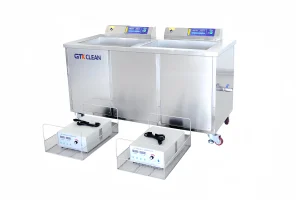
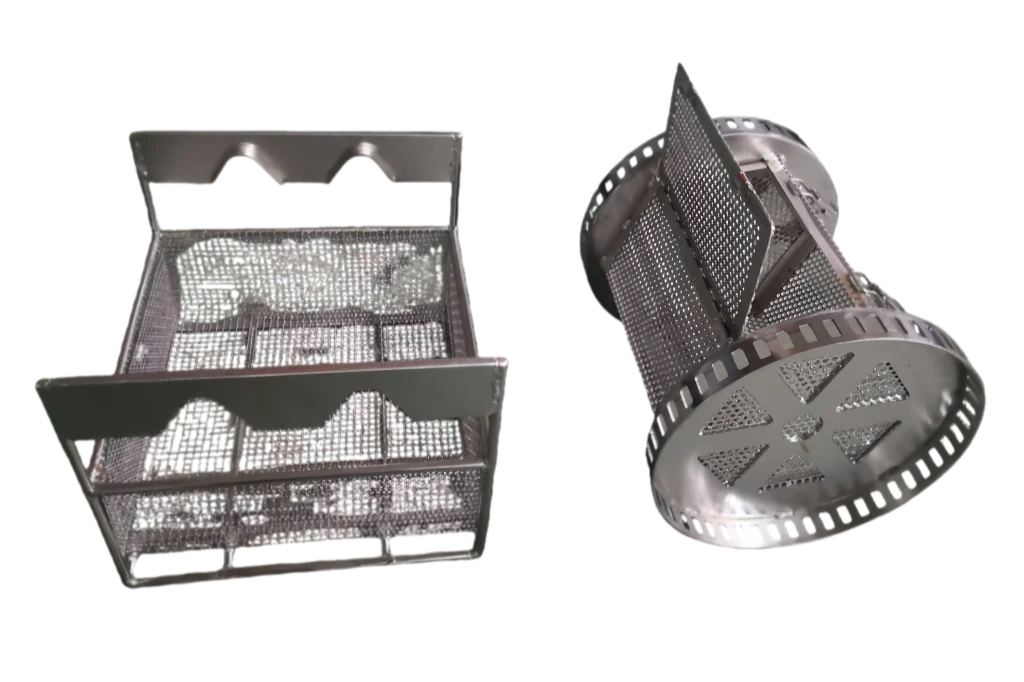
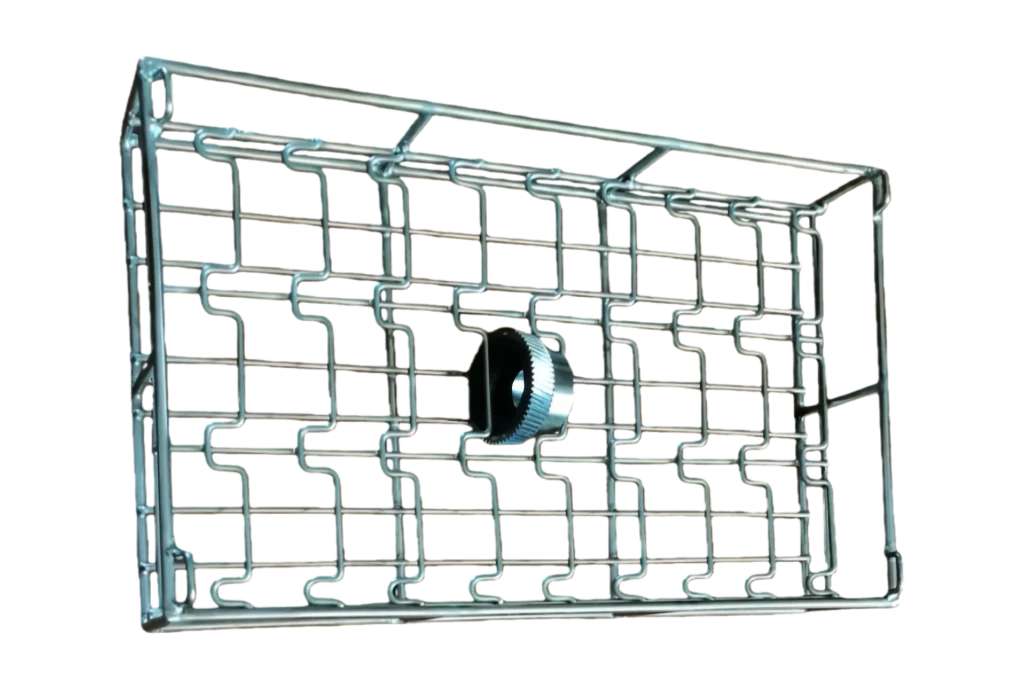
A well-designed line separates chemistry zones clearly. An alkaline wash tank, an acid activator, a rust-inhibitor stage, and a final DI rinse should not exchange fluid freely. Baskets, fixtures, and part geometries that drag large volumes of liquid from one tank to the next will create pH mixing problems that no chemical adjustment can fully correct.
Common pH-Related Cleaning Failures
The following examples repeat across machine shops, coating lines, and precision manufacturing:
- Alkaline wash pH drops without acid addition: the bath is consuming alkalinity to saponify oil. Check reserve alkalinity, oil load, and skimming rather than adding only caustic.
- Aluminum parts turn gray or black: pH is outside the safe band, silicate inhibition is depleted, or temperature is too high. Stop the load and sample the bath before making an adjustment [4].
- Steel parts flash-rust after cleaning: final rinse pH may be too low, rust inhibition may be missing, or parts stay wet too long before drying.
- White spots remain after drying: the rinse is carrying dissolved solids. Check conductivity, rinse flow, nozzle coverage, and carryover instead of lowering rinse pH alone.
- New DI water reads pH 5.7 and is rejected: pure water absorbs CO₂; the reading is expected. Control the final rinse by conductivity and residue, not only pH [3].
Get a pH and Aqueous Chemistry Review for Your Parts
If you are setting a pH target for a new part number or troubleshooting etching, staining, or residue, start with pH and alkalinity or acidity measurements across wash and rinse stages. A process audit should include bath loading, cycle time, temperature, water quality, carryover, and final rinse performance.
For a line review or cleaning-system configuration, contact GTKCLEAN at [email protected] or +86 17768507147. Include material, soil type, production volume, and current cleaning bath data. That information determines whether the next improvement belongs in chemistry management, rinse design, or cleaning equipment configuration.
Frequently Asked Questions About pH in Parts Cleaning
What pH should an ultrasonic cleaning bath be?
There is no single universal pH. Most production ultrasonic cleaning baths run mildly alkaline, often near pH 8–11, for oils and general shop soils. Acid formulations run lower for oxides, rust, and scale, while neutral baths are selected for delicate or corrosion-sensitive parts.
Does pH affect ultrasonic cavitation?
pH does not change ultrasonic frequency or generator power, but it changes the chemistry that cavitation accelerates. In an optimized alkaline bath, saponification and surfactant action can make cavitation more productive because the loosened soil is easier to carry away.
What happens if pH is too high or too low?
Too high a pH can etch aluminum, zinc, and brass, attack some seals, and destabilize certain surfactants. Too low a pH can acid-etch aluminum, strip zinc, and leave steel vulnerable to flash rust. Either condition can produce precipitation, residues, stained parts, or shortened bath life.
How often should pH be measured?
At minimum, measure once per shift for a stable production line. Measure more frequently during start-up, after chemical additions, after a long idle period, or when the line is processing heavier contamination than normal. Record pH with temperature, conductivity, bath level, and time.
Why is my DI rinse water pH around 5.6?
High-purity water absorbs carbon dioxide from air and forms weak carbonic acid. A pH near 5.6 is expected for clean DI water and does not indicate acid contamination. For final rinse control, conductivity and residue testing are more meaningful than pH alone.
Is a pH reading enough to verify cleaning quality?
No. pH is necessary but not sufficient. Alkalinity or acidity reserve, detergent concentration, conductivity, temperature, particle counts, water-break behavior, and residue or coating tests may all be required for a complete process verification.
What pH is safe for aluminum parts?
Aluminum is amphoteric, so exceptionally high or low pH can both cause attack. Many production lines operate in the mildly acidic to mildly alkaline band with proper inhibitor packages, but the safe window depends on temperature, exposure time, chelates, and rinsing. A specific aluminum-safe pH should be established for the exact part and cycle, not copied from a general table.
References
[1] ASTM International, “ASTM D1293-18: Standard Test Methods for pH of Water,” ASTM International, West Conshohocken, PA, USA, 2018.
[2] ASTM International, “ASTM D1067-16: Standard Test Methods for Acidity or Alkalinity of Water,” ASTM International, West Conshohocken, PA, USA, 2016.
[3] ISO, “ISO 3696:1987 Water for analytical laboratory use — Specification and test methods,” ISO, Geneva, Switzerland, 1987.
[4] ASM International, “Corrosion of Aluminum and Aluminum Alloys,” ASM Handbook, vol. 13B, Materials Park, OH, USA, 2005.
If you’re interested, check out these related articles:
What’s the Best Pre-Coating Cleaning Machine for PVD, DLC & CVD Coating Factories?
Aerospace Part Cleaning Solutions – GTK
How to Ensure Perfect Coating Adhesion Without Water Spots or Stains?
The Engineer’s Guide to Pre-Coating Surface Preparation